








Two Critical Tips for Wind Farm Owners to Consider When Selecting an ISP

As an independent service provider (ISP) to the wind energy industry that recently surpassed 10,000 wind turbine component repairs, PSI Repair Services has earned the confidence of some of the largest wind farms in the United States. So, when we were recently approached with the question, “What advice would you give to wind farm owners when it comes to selecting an ISP?,” two points came to mind: First, PSI recommends an ISP that works closely with wind farm operations and maintenance (O&M) staff to uncover repair and reliability solutions. Second, PSI recommends an ISP with the right tools and talent in place to solve your problems and reduce operating costs.


At PSI, we understand that wind turbine component failures typically involve multiple factors. That’s why we work closely with O&M staff to learn about nagging performance issues. Our experienced engineers have a track record of putting an end to nagging performance issues by engineering more efficient solutions that increase mean time between failures (MTBFs) and reduce operating costs. For example, when our engineers noticed a high volume of H-bridge/hub converter failures, they studied the design and developed a replacement switching board that lasts 2-3 times longer. Today, every H-bridge/hub converter repair uses PSI’s upgraded design to help wind farms increase MTBFs and reduce operating costs.  


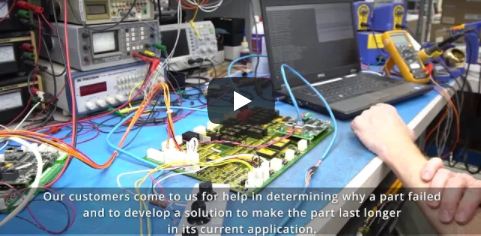
PSI also uses state-of-the-art diagnostic equipment to insure wind farms receive the very best repair quality. By combining powerful tools and engineering experience, PSI can identify why components fail and recommend corrective actions to resolve the issue the first time around, avoiding the frustrating time and costs associated with repeat failures.


All in all, PSI believes in making life easier for wind farm owners. And shouldn’t that be the goal for hiring an ISP in the first place?

IGBT-PowerConverter-web


Don’t replace your broken vacuum pump – repair it and save money!

For nearly 40 years, PSI Repair Services has seen a fair share of broken vacuum pumps come through the doors. Yet, even to this day, we still hear from plant managers and operations personnel that didn’t realize they could save money by repairing their broken vacuum pump. They’re even more surprised when they learn that they could save as much as 70% versus the cost of buying a new, replacement unit. And it doesn’t matter if it is a Beach-Russ, Dayton, Gardner Denver, Mitsubishi, Siemens, Stokes, Ulvac or Whitlock. PSI has repaired them all.


BeachRuss-Before-After

We thoroughly check and evaluate the gaskets, seals, bearings, valves, temperature probes, belts, couplings, pulleys, and electrical motors on every broken vacuum pump we receive. If there are any unsalvageable and/or obsolete components, PSI’s Engineering Department offers comprehensive rebuild/remanufacturing services. In many cases, PSI’s engineers can enhance the performance of a faulty OEM component with superior, more efficient technology to further extend the component’s life.


To go the extra mile, PSI offers synthetic oil to protect your vacuum pump from high load/temperatures, intermittent operation, warm/cold climates and mobile applications. We also utilize a dry lube process to lower friction and increase running efficiency in the rotating group, as well as add rust inhibitors to improve material integrity and increase operating life. We even balance your vacuum pump to ISO 2.5 levels, even though 6.3 is the norm. In addition, we spin balance where a bubble balance is standard.


Best of all, PSI employs the industry’s most complete and thorough after-repair test procedures. We perform bench and system tests to ensure that your repaired vacuum pump will operate correctly back in your plant. Plus, if you need to get your vacuum pump back into production as quickly as possible, PSI offers emergency services and exchange units (if available) to speed up the process.


Now, do you see any reason to buy a new vacuum pump?


PSI Repair Services helps transit industry sustain older technology

In recent years, PSI Repair Services has seen a noticeable increase in repair projects from the transit industry. A large number of these repairs involve older technology and specialty parts that the OEM no longer manufactures, sells or repairs. In many instances, these aged parts are causing premature and catastrophic failures. And, due to funding constraints and long lead times for new train deliveries, many transit agencies have opted to continue operating these older trains, which can double the planned life of the original equipment.

GTO-Before-After

The good news is that PSI offers the transit industry a wide range of services, including repair, modification, failure analysis, corrective action and remanufacturing. Our reverse-engineering expertise allows us to successfully repair and/or remanufacture obsolete parts. PSI can also modify end-of-life parts with current, commercial-off-the-shelf (COTS) parts that operate more efficiently, run cooler and have increased uptime. Cost-saving services like these have saved our customers millions of dollars in reduced maintenance expense.


For more information on transit industry services from PSI, contact Richard Alderete at (512) 560-0021 or Richard.Alderete@psi-corp.com.

Expert Ball Screw Repair Advice That Will Save You Money

When it comes to high-precision positioning for rotary-to-linear motion, the ball screw provides unequaled reliability and performance. These highly efficient components are commonly found on machine tools (CNC axis machines, Broaching machines, Milling machines, Hobbing machines, Grinding machines, Lathes, etc.), robots and precision assembly equipment (like a Semiconductor wafer transport system). They are also frequently found on aircraft and missiles.

Why ball screws fail

Ball screws fail for a variety of reasons, such as accidents resulting from electronic malfunctions, poor design (under capacity), too high preload, misalignment, environmental, operator error, poor maintenance and normal wear and tear over time.

Ball screw failure warning signs

If your ball screw shows signs of pitting or corrosion from contaminants, it is deteriorating. If it shows signs of heat discoloration and operates roughly (wobbles, chatters, growls, etc.), it is likely inadequately lubricated, misaligned and/or has worn/damaged bearings. If the ball screw suffers from excessive vibration, it likely has a bent screw shaft or misaligned bearing housings. If it is making a “clicking” sound, it is generally a sign of excessive build-up, or a broken/dented return tube. If the ball screw shows a loss of positioning accuracy, it is likely due to wear, contamination or endplay in the support bearings. If it displays excessive power draw, it likely has an excessive preload, ball recirculation problems or inadequate lubrication.

Tip: Even patterned brinelling marks in one location indicate a severe overload (trauma), such as a shock load or crash. It is quite likely that the return system may have suffered damage as well.

Repair or replace your ball screw?

Buying a new ball screw from the OEM is certainly an option, but a very pricey one. Since ball screws are machined from top quality material, hardened and ground to precision tolerances, they usually do not need replacing when worn. Therefore, it is cost-effective to seek service from a repair expert. How cost-effective is ball screw repair? In some cases, you can save up to 70% versus the cost of buying new from the OEM.

Ball-Screw-Repair-blob

Seeking a ball screw repair company

When evaluating ball screw repair companies, it is wise to seek out companies with a track record of success servicing all types of foreign and domestic ball screws. They should offer a free evaluation, along with these three service options: Reload (clean and polish the screw), Recondition (regrind the screw and/or ball nut) and Replacement (replace with new screw and/or nut). In other words, ask the company if they have the capability to regrind the screw and install new nuts, balls and seals. In addition, ask them if they produce new ball screws or offer remanufacturing services (not just reload) in the event that the ball screw is unsalvageable. And, in the event that one of your critical machines goes down, ask them if they offer emergency repairs, where a ball screw can be reassembled with minimal preload and used on a temporary basis until a replacement unit is received. If the repair company has a Surplus Parts Department, that is a nice bonus as well.

A credible ball screw repair company should be ISO 9001 certified and operate a full range of state-of-the-art ball screw repair equipment, like CNC thread grinders, CNC 5-axis machining centers, CNC turning centers, ID/OD grinders and a laser lead checker, with resolution to 20 millionths of an inch. I also recommend that you ask the repair company if they have a Quality Assurance Department that will ensure that your repaired ball screw meets required tolerances and performance.


By following the above recommendations, your company will gain peace-of-mind that all your ball screw repair needs will be met by a professional ball screw expert.